
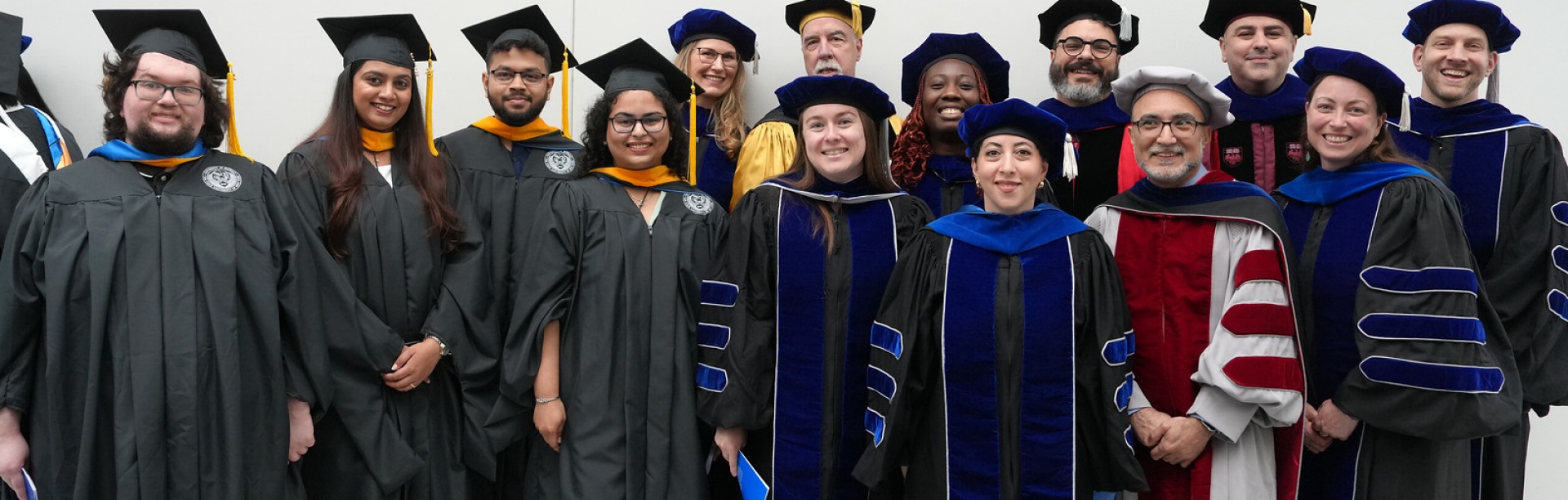
CAREER DEVELOPMENT & ALUMNI ENGAGEMENT
From your first semester to your first job and beyond.
Your time at the Jacobs School is the starting point, not the end.
Career exploration is not something you do alone, and it does not stop when you graduate. Are you a current student? Let's find you resources to get started. Alumnus? We'll help you stay involved and give back.
For Current Students
Most students start graduate school focused on their coursework and research, with plans to think about jobs later. We encourage you to start earlier. Career exploration works best when it starts on Day 1 and runs alongside your program, not after it.
Career Exploration & Networking
Start here to explore what's out there.
The UB Graduate School has roadmaps for professional skills development, plus a full event series to go with them!
Networking doesn't have to be a dirty word. Plain and simple, it's relationship-building. It works best when it's ongoing, not something you start when you need a job. The connections you build throughout your program can shape where you end up.
Want to connect with UB alumni and professionals across career sectors? Check out the Biomedical Career Forum on Connect-a-Bull.
The Job Search
Identify sectors and roles that interest you early to make the job search much more manageable when you get there. Then, when you're ready:
- Build a CV or resume that represents your skills and experience.
- Get organized for the job search.
- Prepare for interviews.
Did you know most jobs are never posted publicly? Learn how to navigate the hidden job market.
Blog: How students actually land their first role, from someone who has been through it.
The Biomedical Job Search: What I Wish I’d Known Before Graduation
Tyler Rolland, PhD ’25
"Earlier exploration can reduce uncertainty and support more informed decision-making. Here are five lessons I learned, each paired with a concrete action you can take today."

For Alumni
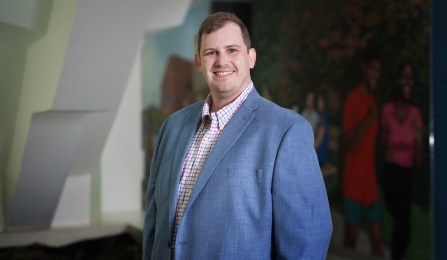
Your relationship with the Jacobs School does not end after graduation. We want to know where your path takes you, and so do our current students. There are many ways to stay engaged and give back.

Mentor Current Students
Share your experience and help students think through their options through UB Connect-a-Bull.

Participate in Events
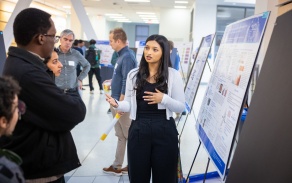
Join career panels, alumni receptions, and recruitment events throughout the year.

Share your story for marketing content or represent Jacobs School graduate programs at recruitment conferences and events.
Join our Mailing List
Stay connected to alumni events and opportunities by signing up for updates. By keeping your contact information up to date, you'll be informed as new initiatives launch.
Alumni Ambassador Program
Join the Alumni Ambassador Program, a flexible way to stay engaged and give back. Participation can be as light or as active as your schedule allows, with opportunities to provide marketing content, share insights at events, and mentor current students.
For Students & Alumni
Career resources and alumni connections live in the same place here. Whether you are a student looking for advice or an alumnus who wants to share what you know, this is where those conversations happen.
Biomedical Career Forum
The Biomedical Career Forum is a moderated space where graduate students and alumni connect around careers in the biomedical sciences. Unlike broad networking platforms, it's curated specifically for the UB biomedical community, making it easier to find meaningful connections, share experiences, and expand your professional network.
Discussion topics include:
- Exploring career sectors
- Networking strategies
- Interviewing and job searching
- Finding your first job
Events & Opportunities
Attend our events to network and learn more about potential career pathways.
For Students & Alumni: Biomedical Careers Webinar
Sept. 30, 2026, 4-5 p.m.
Alumni panel discussion on jobs in academia, encompassing tenure-track roles and much more.
For Students: Turn Your Training into a Meaningful Career
Oct. 13, 2026, 4-6 p.m.
Join the UB Career Design Center to find your "why."
For Students & Alumni: Biomedical Careers Webinar
Nov. 2026, Date & Time TBD
Alumni panel discussion on jobs in industry, encompassing biotech, pharma, and more.
For Students: A 5-Day Career & Life Lab
Jan. 11-15, 2027, 3-5 p.m.
Take a deeper dive over winter break.
For Students & Alumni: Career Day
Spring 2027, Date & Time TBD
Registration & additional details coming soon!
Outcomes Data
Doctoral Career Sectors

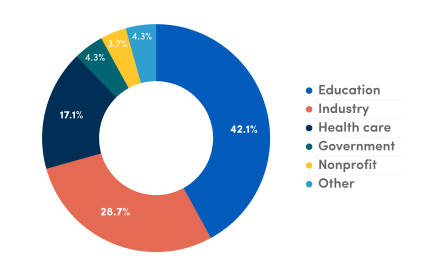
Top Employers
- University at Buffalo
- Thermo Fisher Scientific
- Roswell Park Comprehensive Cancer Center
- Janssen, Inc.
- University of Rochester Medical Center
- Johnson & Johnson
- Amgen
- University of Colorado Anschutz Medical Campus
- University of Wisconsin Madison
- The Johns Hopkins University School of Medicine
- Stowers Institute for Medical Research
- MD Andersen Cancer Center
Typical Job Titles
- Postdoctoral Researcher
- Assistant Professor
- Research Assistant Professor
- Principal/Senior Scientist
- Medical Physicist
- Toxicologist
Percentage in faculty roles
14%
Masters Career Sectors

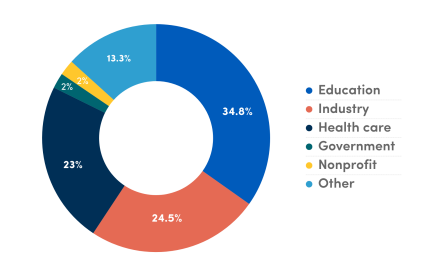
Top Employers
- University at Buffalo
- Roswell Park Comprehensive Care Center
- Thermo Fisher Scientific
- Curia
- Regeneron Pharmaceuticals
- Eli Lilly and Co
- US Food and Drug Administration
- Massachusetts General Hospital
Typical Job Titles
- Research Assistant/Technician
- Scientist
- PhD or MD Student
- Laboratory Technologist
- Clinical Research Coordinator
Percentage going on for higher degree
42.5%
Top Job Skills: all MS and PhD grads combined
- Research
- Data Analysis
- Polymerase Chain Reaction
- Cell Culture
- Molecular Biology
- Western Blotting
- Biochemistry
- Cell Biology
- Elisa
- Fluorescence Microscope
- Protein Purification
Current career data for 2015-2025 graduating classes


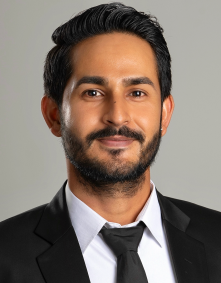
Narayan Dhimal, PhD '24, | Neuroscience
PhD to MD Student, Jacobs School
I am currently a medical student at the Jacobs School of Medicine and Biomedical Sciences at the University at Buffalo, after completing my PhD in neuroscience. My path to medicine was not linear, but every step helped shape the kind of physician I hope to become.
My journey began in a refugee camp in Nepal, where I grew up seeing how deeply poverty, displacement, limited education, and limited access to healthcare can affect families and communities. After immigrating to the United States, I had to adjust to a new language, culture, and education system. Those experiences taught me resilience, humility, and the importance of compassionate support systems.
During college, I became involved in research, first through work in a biochemistry lab studying diabetic retinopathy. That experience introduced me to the power of scientific discovery and helped me see how research can contribute to better understanding disease. I later pursued a PhD in neuroscience, where I developed a deeper appreciation for the complexity of the nervous system, the importance of rigorous scientific thinking, and the value of persistence through long-term challenges.
At the same time, my clinical shadowing, volunteering, and community work reminded me that my long-term goal was not only to study disease, but also to care for people directly. Whether through volunteering, mentoring students, shadowing physicians, or serving in community-based roles, I kept returning to the same motivation: I wanted to combine research and healthcare in a way that could serve patients, especially those from underserved and diverse backgrounds.
My “why” comes from my own lived experiences and from the people who supported me along the way. I know what it feels like to come from a background where opportunities are limited, and I also know how transformative mentorship, education, and encouragement can be. That is why mentorship has become such an important part of my journey. I hope to continue supporting students who may not see many examples of people with backgrounds like theirs in medicine, research, or higher education.
My advice to current students is to not be discouraged if your path looks different from someone else’s. A nontraditional path can still be a strong path. Seek mentorship early, stay open to feedback, and remember that setbacks do not define your future. Each experience, whether in the lab, classroom, clinic, or community, can help clarify your purpose and strengthen your ability to serve others. For me, the combination of perseverance, mentorship, research, and service ultimately led me to medical school, and I hope my story encourages others to keep moving forward even when the path feels uncertain.

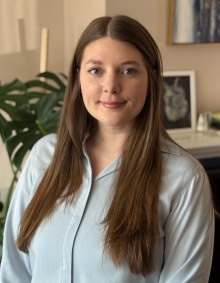
Meghan Conner, PhD '23 | Biochemistry
PhD to Medical Communications Manager
When I began my PhD in the PPBS program in August 2018, I had already decided I wanted to go into science writing. Completing my degree at UB helped me to hone in on exactly which aspects of this career appealed to me. In Christine Schaner Tooley’s lab, I was able to develop a strong scientific knowledge base that has continued to serve me well during my transition from graduate school to industry. I currently work as a Medical Communications Manager at a biotech company in Pittsburgh (Krystal Biotech). The ability to understand complex data and effectively communicate it to others has been vital to the work I do now, which is a combination of scientific affairs, medical affairs, and medical information. I have never felt unprepared or that my training was insufficient for this career; I have continued to feel confident in my abilities since I started in my field over two years ago.
The most important thing I learned in graduate school was the value in open collaboration. In my current role, I am in constant communication with many different teams throughout my company. Knowing how to effectively communicate with both scientists and non-scientists is one of the most important skills I have developed, and that began at UB. I developed a strong bond with not only my mentor and my labmates, but with the surrounding labs in my department and other students and faculty in other departments. Scientific collaboration was always encouraged during my time at UB; there is value in building working relationships to foster collaboration and get the necessary support for completing projects.
From my experience of moving right from graduate school to a small, commercial-stage biotech company, employers are looking for graduates that can quickly adapt. No one comes right out of a PhD with the exact knowledge base needed to work on every single research area that a company may be involved in; instead, there is the expectation to quickly get up to speed with the relevant terminology and concepts. A background in a relevant scientific area and the ability to learn new topics quickly would help any new graduate looking to join the workforce.
The career opportunities that are available to someone with a scientific degree are so much broader than what I initially imagined. Sometimes, as a student, I began to think my options were “Academia vs. Industry,” with everything encompassed under one of two paths. In reality, there are so many different career tracks for someone with a PhD. It can be difficult to conceptualize exactly the type of career you’re looking for due to limited exposure as a graduate student. Careers in Clinical Development or Medical Affairs seem far-removed from the day-to-day of a bench scientist. The unique training a PhD candidate undergoes ensures that you have the foundation to transition to any department and work on any topic because what a PhD is really teaching you is how to approach complex problems and identify strategies to resolve them.

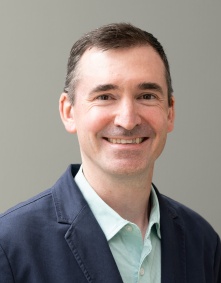
Robert Majovski, PhD '07 | Biochemistry
PhD to Cold Spring Harbor editorial to Broad Institute, Scientific Advisor
My career in not-for-profit biomedical research began at the Jacobs School of Medicine and Biomedical Sciences (then the Interdisciplinary Graduate Program in Biomedical Sciences), where I earned my PhD in Biochemistry in 2007. Parallel to my bench work, I was drawn to scientific communication, seeking a path that bridged my research training with the writing and communication skills I’d intentionally built as an undergrad. The definitive turning point of my time at UB was Biologue, a grassroots, student-led journal I co-led with a small group of like-minded PhD students. Supported by UB and the Graduate Student Association, it provided a low-pressure writing outlet for trainees and gave us our first real taste of the editorial side of science. Up to that point, we had only seen publishing from the author's perspective.
Although Biologue published just a few issues before the founding students graduated and moved on, it became the catalyst for my first major career pivot: joining the professional editorial staff of the journal Genome Research at Cold Spring Harbor Laboratory (CSHL) right after defending my thesis. Commonly known for its meetings and courses program, CSHL is a not-for-profit research organization that also publishes community-focused journals from the CSHL Press office. Over five years at Genome Research, I learned to steward manuscripts through the review process and communicate diplomatically with the global genomics community. Through networking conversations with journal editors who had transitioned into various research roles, I came to understand that the skills I had been developing—combining scientific training with editorial expertise—could be incredibly valuable in direct support of mission-driven research organizations and their individual teams.
This realization led me to the Broad Institute of MIT and Harvard, where since 2013 I have served in advisory and educational roles, including supporting core faculty labs, the Office of the Director, and our Data Sciences Platform. Working at a mission-driven, not-for-profit research institute feels remarkably academic. Many researchers in the Broad Institute community hold affiliations at MIT, Harvard, or Harvard Medical School, and our core faculty run their labs directly on-site. However, as an independent organization, we have the unique flexibility to remain nimble and organize rapidly around new opportunities for understanding and reducing the burden of disease. The Broad Institute leverages faculty and affiliated scientists from the world-class research ecosystem of the Boston area, while also employing a strong cohort of PhD-trained scientists—both at the bench and in advisory roles like my own—to drive our research goals forward and remain a leader in the field.
Today, as a Scientific Advisor to one of our core faculty labs, my day-to-day work is fast-paced and highly collaborative. Specifically, I support my team and our external partners across projects that integrate molecular, microfluidic, and computational technologies. My role involves translating complex science into funding applications and manuscripts, managing project milestones to keep large-scale collaborations on track, and mentoring and coaching junior colleagues on communication and strategy. In addition, I remain connected to my editorial roots by routinely giving workshops and lectures on the practice and ethics of publishing to researchers and students in our community.
If my path from UB to the Broad Institute highlights anything, it is that a PhD trains you to solve complex problems far beyond the lab bench. For current and prospective trainees at the Jacobs School, my advice is to create and embrace organic, non-traditional opportunities when they interest you—sometimes a seemingly small project can open up the next stage of your career.

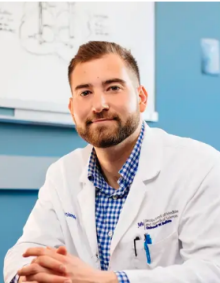
Ben Rein, PhD '21 | Neuroscience
PhD to Stanford postdoc to published author with Penguin Random House (Why Brains Need Friends)
Working with Dr. Zhen Yan in the Department of Physiology and Biophysics, I learned the foundations of how to design, lead, execute, and publish scientific papers. This productive experience supported my development as I transitioned into a postdoctoral position at Stanford University, working with Dr. Rob Malenka. As a student in the PPBS program, I led research focused on the neurobiology of autism. My experience studying the biology of social interaction empowered me to write the Penguin Random House book: Why Brains Need Friends: The Neuroscience of Social Connection. I strongly recommend the PPBS program to prospective students not only for the great education, but for the flexibility to grow and design your PhD experience. For instance, I worked with the program director to design a new course, which gave later-stage PhD students (including myself) the opportunity to gain teaching experience.

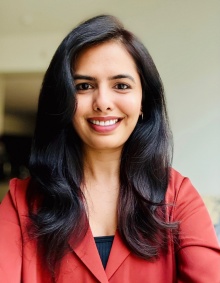
Maitreyee Kulkarni, MS '21 | Neuroscience
MS to PhD student
I enrolled at the University at Buffalo to pursue a Master of Science in Neuroscience under the mentorship of Dr. Thomas Covey. My academic and professional trajectory is deeply rooted in the training I received at UB; without that formative experience, I would not be where I am today. I arrived from India with some prior research exposure. My time in Buffalo was transformative, both intellectually and professionally, as it shaped my identity as a scientist. I developed a rigorous understanding of the research process and a sustained enthusiasm for scientific inquiry. Much of this growth is attributable to the exceptional mentorship of Dr. Covey, whose guidance was consistently supportive and encouraging. I completed my degree during the global COVID-19 pandemic, yet I remained confident in my ability to finish the program on schedule. The academic environment fostered intellectual risk-taking while ensuring strong institutional and mentorship support. The curriculum provided broad exposure to diverse areas within neuroscience, enabling me to refine my research interests and define the direction of my future work. I was also encouraged to present my research across multiple platforms, culminating in the publication of a peer-reviewed article in a respected journal. Following graduation, I secured a research position at Massachusetts General Hospital, where I engaged in advanced, cutting-edge research. This experience, combined with my graduate training, positioned me competitively for admission to a doctoral program at an R1 research institution.
I learned two important things during my time at UB. First, the things you’re most afraid to try often turn out to be the most enjoyable and surprisingly easy, so it’s important to approach the unknown with an open mind. Second, it’s okay to make mistakes, as long as you’re honest about them. In fact, making plenty of mistakes is part of the process. That’s how real growth and progress happen. These lessons shaped how I approached the next stages of my career and professional development. I wish I had understood earlier how important networking is and how valuable it can be to reach out to people without hesitation. Most people genuinely enjoy talking about their work if you simply take the initiative to approach them. The connections you build can open doors to opportunities you might never have expected. Looking back, my time at UB not only prepared me academically but also gave me the perspective and confidence needed to navigate a career in research.

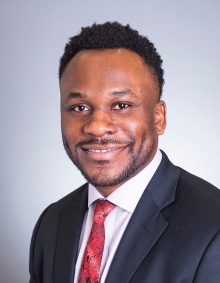
Oswald Dadson, MS '12 | Pharmacology
MS to Principal Trial Manager
Associate Director, Principal Trial Manager at Merck
My Master of Science in Pharmacology and Toxicology provided the vital scientific literacy needed to bridge the gap between academic research and clinical research that provides vital medicines to patients. It also provided a strong foundation on which to build leadership skills.
Some of the most critical lessons I carried from my time at UB was the importance of rigorous data integrity and accuracy, which remains the bedrock of my work today in clinical data management. Providing accurate and reliable data provides the confidence needed when engaged with cross functional team members at various levels.
One thing I know now that I didn’t value as much in graduate school is the value of effective communication. While graduate school teaches you to speak to fellow scientists, professional success often hinges on your ability to effectively communicate research findings to non-technical stakeholders. Whether presenting to executive leadership or cross-functional partners, the most impactful leaders are those who can translate specialized data into a clear, actionable narrative.

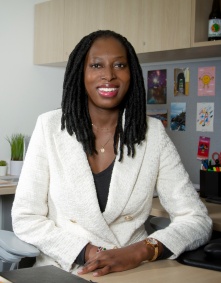
Anyango Kamina, PhD '18 | Microbiology & Immunology
PhD to Assistant Dean for Faculty Development at the Jacobs School
I am currently an Assistant Dean for Trainee and Faculty Development at the Jacobs School of Medicine and Biomedical Sciences. The same school where I received my PhD in Microbiology and Immunology. In my role, I am involved in biomedical education research and developing programs that support trainees and faculty development. My degree prepared me for this career in several ways. The most prominent is building my critical thinking and problem-solving skills. I still take a data-informed/data-driven approach in my work, which is like the approach I used while completing my graduate training.
The most important things I learned in graduate school are patience and the power of “yet”. Unlike undergraduate training, where a part of it feels the milestones to graduation are very structured, the graduate school timeline can ebb and flow depending on your project. Therefore, I had to unlearn this idea of comparing my progress to that of my peers in other programs and instead focus on the milestones that were set by my department and informed by the type of project I was doing. I learned that since the goal of graduate training is building a more in-depth expertise in a topic, learning how to critically think, and designing effective ways to address a problem, it was ok if my graduation timeline was not as structured as I had initially planned.
I wish I knew that a role like the one I have now existed as a career option. Now in this role, I attend conferences with academic administrators who are doing the same thing I am doing and asking similar questions/ doing research about the future of biomedical sciences. Therefore, it is exciting to be a part of a community of scientists who trained in biomedical sciences that are now studying and shaping biomedical education. Although I did not know what the title for this role was when I was a graduate student, I do know that some of the areas that I wanted to engage in included mentoring, curriculum, and the learning environment- particularly in support services and professional development opportunities for graduate trainees. In this role, I get to engage in all these things and still participate in research. I am glad to see that there are a lot of career-focused events that are doing a better job of showcasing the many career pathways that are possible for graduates. During my training, most career opportunities emphasized were either as an academic faculty member or as a research scientist in industry. There is so much more, and I am happy to see that current students are exposed to it.

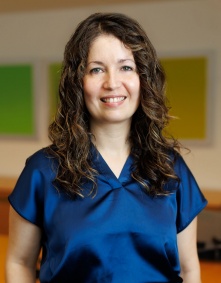
Melisa Medina-Rivera, PhD '19 | Biochemistry
PhD to Lecturer in Molecular Nutrition at Cornell University
Graduate school taught me a great deal about failure and resilience. Not everything works the first time you try something and learning how to move forward when things do not go as planned is an essential skill to have. It also helped me learn to trust myself and find my voice.
Employers value not just the skills that you bring to the table but also whether you are a good fit for the culture of the organization. They seek individuals who can work independently while also collaborating effectively with others. The ability to think critically, offer constructive feedback, and develop creative solutions to everyday challenges is also highly valued.
In recent years, adaptability has become an very important skill as well. Workplaces often require people to adjust quickly to new information, shifting priorities, and unfamiliar situation.
I wish I had understood earlier how important is to make time for self-care. I learned this the hard way. Doing your best work requires for you to eat well, get enough sleep, exercise, and maintain social connections. At times it may feel like there is no room for these things, but over time, you get better at planning and building a support system of people who help you along the way.

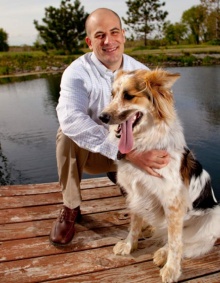
Robert Foxenberg, PhD '07 | Pharmacology
PhD to Director of Product Safety
Completing my degree at UB Jacobs School of Medicine & Biomedical Sciences showed me how to integrate multiple disciplines to tackle questions. I saw early on how techniques, data, and mastery from one department can benefit another through collaboration. This has translated to working across multiple sciences or technical backgrounds for industry, where you need to leverage knowledge from many areas to innovate. My research at UB showed me the value of not only being able to create sound science but, most importantly, how to translate and communicate the human and societal benefits of the data and its conclusions.
My advice to students who may be interested in exploring a career in industry is to gain as many experiences as you can. Learning will not end. Science evolves. You will be part of a team, how you contribute can change. The questions you seek to answer and the value you bring through your abilities are not constant. Be broad in your thinking and approach. Remember how to form and address your questions and anchor yourself in your past experiences, knowing you mastered before, so can again.


