Areas of Research
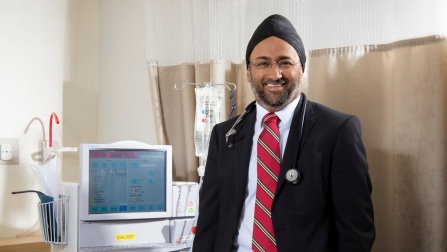
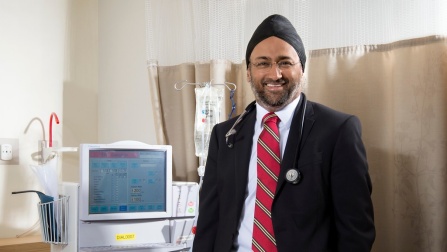
Members of our division — including Mandip Panesar, MD — publish their research in journals such as the International Journal of Nephrology and Seminars in Dialysis.
Our faculty members and fellows are engaged in innovative translational, basic and clinical research in a variety of areas.
Our physician-scientists have made contributions to areas including:
- the long-term renal impacts of chemotherapy agents in adult cancer patients
- abdominal pain associated with IgA nephropathy
- understanding the response of cells to conditions of hypo- and hyperosmolality
- adverse events among renal transplant recipients receiving outpatient parenteral antimicrobial infusion therapy
- prevalence, predictors and outcome of nephrology referral in stage 3 chronic kidney disease patients
- the use and complications of medications used in transplant immunosuppression regimens
Wide Range of Research Interests
Members of our division have studied the influence of gender and race on renal transplant recipients’ metabolism of kidney medications. Results of this research have enabled us to identify the best treatment protocol for each of our patients.
Some of our faculty members concentrate on understanding mechanisms that underlie kidney disease, including the role of the complement system.
We have developed and studied animal models of:
- systemic lupus erythematosus
- diabetic nephropathy
- glomerulonephritis
- obstructive nephropathy
- acute renal failure
Additionally, our research has suggested that transplantation is a viable, cost-effective option for incarcerated patients with end-stage renal disease, including those who have chronic hepatitis C infection.
Currently, our faculty members are pursuing research in these areas:
Jessy Alexander, PhD
- Experimental renal inflammation
- Monocytes in circulation and Macrophages in tissues
- Mouse models of sterile inflammation and autoimmunity
- Neuropsychiatric lupus
- Nuances of complement and endothelial cells
- Pathobiology of the complement system
Pradeep Arora, MD
- Epidemiology of chronic kidney disease (CKD)
James Farry, MD, MS
- Medication and toxin-induced acute kidney injury
James Lohr, MD
- Epidemiology of acute kidney injury
- Hypertension
Mandip Panesar, MD
- Clinical informatics
Richard Quigg, MD
- Clinical informatics
- Experimental models of renal disease
- Functional genomics
- Pathobiology of the complement system
Rabi Yacoub, MD
- Gut microbiota and renal diseases : Evaluating the effects of gut microbiota diversities in different stages of kidney injury and its role on disease progression and the development of cardiac co morbid conditions
- Megalin and kidney diseases
- Nephrin role in kidney development : Evaluate the role of the podocytes specific protein Nephrin during early stages of kidney development
- Nephrin role in kidney disease : The role of the podocyte specific protein nephrin in maintaining the podocyte's viability and function, and the effects of its decreased expression in different kidney diseases
- Uremic toxins and CVD/atherosclerosis