University at Buffalo (UB)
Areas of Research

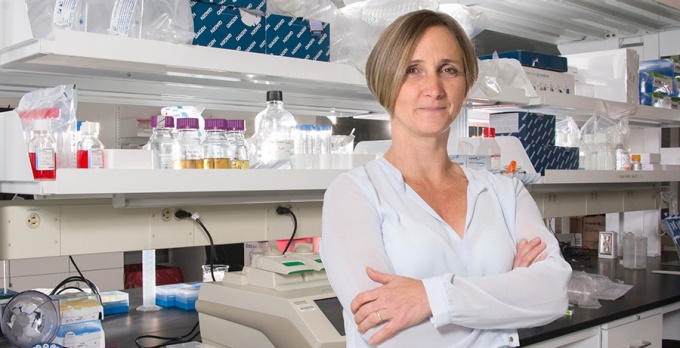
As director of the Translational Genomics Research Laboratory, Kinga Szigeti, MD, PhD, seeks to identify novel risk factors and potential pathways that can be targeted with medications to prevent or modify the course of Alzheimer’s Disease.
Our department makes significant contributions to research in many areas of neurology, exploring novel treatments, disease processes and genetic factors of neurological conditions.
Our faculty members and fellows engage in innovative translational, basic and clinical research in areas including remyelination, neuropsychology and stroke prevention. A major focus of faculty research involves neuroimaging analysis and quantitative imaging to better understand neurodegenerative disorders.
Our clinical research seeks improved treatments and quality of life for patients with Alzheimer’s disease, epilepsy, autism, multiple sclerosis, neuropathies and myasthenia gravis, among other conditions.
Ralph Benedict, PhD
- Alzheimer’s disease and memory disorders
- Multiple sclerosis
- Neuropsychological Testing : Test Development and Validation
Allison Brashear, MD, MBA
- ATP1A3 gene variation movement disorders
- Botulinum toxin
- Dystonia
- Rapid-onset Dystonia-Parkinsonism (RDP)
- Spasticity after stroke
Marilou Ching, MD, MPH, FACP
- Cerebrovascular disease
- Stroke
Michael Dwyer, III, PhD
- Neuroimaging
Osman Farooq, MD
- Electroencephalography (EEG) : Performing and interpreting Electroencephalography
- Electromyography (EMG) : Performing and interpreting Electromyography
- Epilepsy : Evaluation and management of epileptic and non-epileptic (stress-induced) seizures
- Neurologic complications of H1N1 in pediatric patients : Infectious processes in the central nervous system with particular experience in the neurologic complications of H1N1 in pediatric patients
- Pediatric Concussion : Evaluation and management of children and adolescents with concussions.
- Pediatric Multiple Sclerosis and Demyelinating Disorders : Evaluating and the coordination of care of children and adolescents with demyelinating conditions
- Stroke : Pediatric Stroke; Evaluating, treating coordinating the long term rehabilitation of infant, pediatric and adolescent cerebrovascular ischemia
Edward Fine, MD
- Neuromuscular disease
Sarah Finnegan, MD, PhD
- Epilepsy
Robert Glover, MD
- Epilepsy
Thomas Guttuso, Jr., MD
- Movement disorders
David Hojnacki, MD, FAAN
- Multiple sclerosis
- Neuroimaging
- Neuromyelitis optica (Devic's Disease) : This is a neuroinflammatory condition that affects the spinal cord and optic nerves predominantly
khalid kakish, MD
- Metabolic disorders of childhood
Ping Li, MD, MSc
- Epilepsy : Evaluation and management of patients with epilepsy
Norah Lincoff, MD
- Neuro-ophthalmology : RIVER STUDY with Neurosurgery IMPRESS STUDY with Neurosurgery
- Radiation Damage, Inflammatory Optic Neuropathies, IIH, Drug Toxicities
Joy Parrish, PhD, ABBP-CN
- Concussion
- Epilepsy
- Multiple sclerosis
- Neuropsychology : Assessment of neurocognitive functioning in children and adults, with focus in pediatric neuropsychology.
- Pediatric neurology
Melissa Rayhill, MD, FAHS, FAAN
- Headache Medicine : Headache Medicine
Ferdinand Schweser, PhD
- Computational Imaging : biostatistics; machine learning; image processing; image analysis
- Inverse Problems : magnetostatics; source separation
- Magnetic Resonance Imaging (MRI) : phase MRI; susceptibility MRI; iron MRI; preclinical imaging; multi-modal imaging
- Neuroimaging : Neurodegenerative disorder; aging
David Shucard, PhD, FAASM, FAPA
- Cognitive and behavioral neurosciences : Study the relationships between behavioral and biological variables, with an emphasis on the neurophysiology of the brain as the dependent measure
- Cognitive disturbances in Multiple Sclerosis, Systemic Lupus Erythematosus, and PTSD
- Cognitive processes : Neurophysiology associated with cognitive processes such as working memory and attention; information processing; intellectual abilities; learning disorders; intellectual/cognitive development; language development; psychological disorders; drug effects; and immunological reactions
- EEG
- Electrophysiological, behavioral, neuropsychological, immunological, biochemical, and neuroimaging : Techniques used
- Nervous system of both animals and humans
- Neuropsychology
- Polysomnography (Sleep Medicine) : Boarded in Sleep Disorders Medicine
Kinga Szigeti, MD, PhD
- Alzheimer’s disease and memory disorders : CHRFAM7A, a uniquely human fusion gene between CHRNA7 and FAM7A/ULK1, modifies ?7 nAChR function. While it inferred a selective advantage during evolution, it also increased disease susceptibility in an ?7 nAChR localization pattern. Mechanistic insights into CHRFAM7A function on neuroinflammation and neurodegeneration will identify novel targetable pathways with therapeutic and translational promise for AD.
- Cholinergic anti-inflammatory system : The cholinergic anti-inflammatory response is a neuronal-immune interface, where the nervous system regulates immune function through a neurotransmitter. The very nature of the interaction between two separate biological systems historically required in vivo studies in animal models and these experiments represent the foundation of our current understanding. Evidence form animal models indicates that the cholinergic modulation is i) anti-inflammatory and ii) is mediated by the ?7 nAChR. Over the last decade extensive basic science, preclinical and human clinical research on ?7 nAChR revealed one of the most consistent translational gaps. What may be the cause of the ?7 nAChR animal to human dichotomy? CHRFAM7A is one of the duplicate genes that have emerged since the human–chimpanzee diver
Aaron Taylor
- Cerebrovascular Disease : Stroke
Arie Weinstock, MD
- Epilepsy : With special interest in refractory epilepsy, pediatric epilepsy, and epilepsy surgery
Bianca Weinstock-Guttman, MD
- Autoimmune Diseases
- Multiple sclerosis
- Neuromyelitis Optica Spectrum Disorder
Gil Wolfe, MD, FAAN
- Neuromuscular disease
- Neuromuscular outcome measures
Robert Zivadinov, MD, PhD
- Neuroimaging